The Yin and Yang Concept in Martial Arts: Application in Karate.
The concept of Yin and Yang, originating from ancient Chinese philosophy, describes the dualistic nature of existence, where opposite forces are interconnected and interdependent. This principle is deeply embedded in various aspects of life, including martial arts. In disciplines such as Karate, the Yin-Yang philosophy influences techniques, strategies, and training methods, helping practitioners achieve balance between opposing forces such as hard and soft, offense and defense, and mind and body.
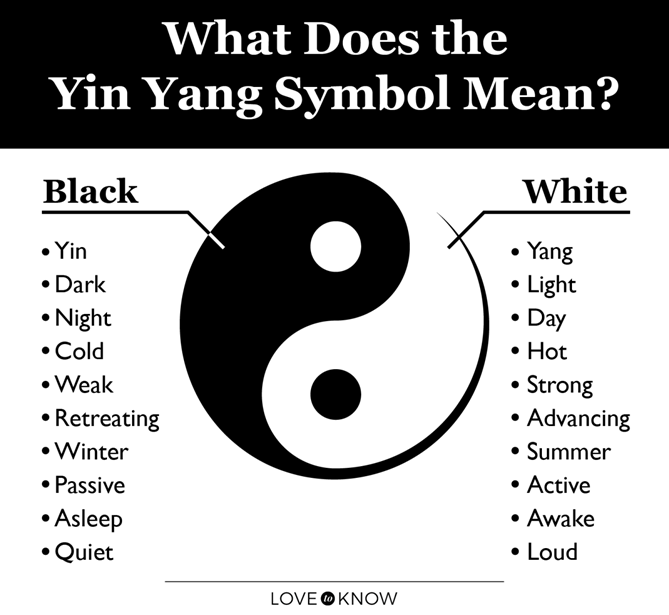 Yang energy represents action, expansion, and progress. It's often associated with the sun, and is described as positive, active, and masculine. Yang energy encourages people to be proactive and take steps to achieve their goals. Also, it encourages people to broaden their understanding and venture into new territories. Yang energy can help people embrace challenges and bounce back from adversity, it also helps people cultivate strength and resilience, and radiate positivity.
Yin energy represents a passive, receptive, and dark energy. It's often associated with the moon, the Earth, and feminine. Yin energy encourages people to embrace stillness and quiet contemplation. It can help people to connect with their inner selves and gain insights. Yin energy can also help people to cultivate a gentle approach to the world.
While Yin and Yang are often described as opposites, they can also be seen as complementary energies that balance each other out. For example, combining yin (slow and restorative) and yang (strong flow) yoga poses can create balance. Practically all eastern martial arts techniques are based on the concept of Yin and Yang.
1. Hard and Soft Techniques in Karate
One of the most evident ways Yin and Yang manifest in Karate is through the interplay of hard (Yang) and soft (Yin) techniques. Hard techniques involve powerful, direct strikes, such as punches (tsuki) and kicks (geri), executed with force and aggression. These align with the Yang aspect “active”, strong, and assertive. On the other hand, soft techniques focus on fluidity, redirection, and evasion, representing the Yin aspect “passive”, yielding, and adaptable.
For example, in Pan Gai Noon style of karate, the name itself means” half-hard, half-soft” style, reflecting a balance between explosive attacks and circular, defensive movements. A skilled karateka learns to integrate both hard and soft techniques, understanding when to strike forcefully and when to absorb or redirect an opponent’s energy.
2. Offense and Defense: The Duality of Combat
Karate embodies the balance of attack and defense, another expression of Yin and Yang. A purely offensive fighter (Yang) may become predictable and vulnerable, while a purely defensive fighter (Yin) may struggle to take control of a fight. The best martial artists maintain a dynamic balance, seamlessly transitioning between aggression and evasion.
For instance, the concept of “Sen no Sen” (preemptive strike) represents Yang, where a karateka anticipates and attacks before the opponent completes their move. Conversely, “Go no Sen” (counterattack after an opponent’s move) embodies Yin, emphasizing patience and reactive strategy.
3. Mind and Body Balance in Karate Training
Yin and Yang also govern the relationship between the mind and body in Karate. Yang represents physical strength, speed, and endurance, while Yin symbolizes mental clarity, patience, and emotional control. A karateka who focuses only on physical power without mental discipline may become reckless, whereas excessive focus on the mind without physical conditioning may lead to weakness in combat.
Traditional Karate training integrates meditation (mokuso) and breathing techniques, helping practitioners cultivate inner calm and focus (Yin) alongside physical exertion and combat skills (Yang). This harmony ensures that a karateka remains composed under pressure, executing techniques with precision and efficiency.
4. The Flow of Energy: Ki in Karate
In martial arts, Ki (Chi or Qi) is the life energy that flows through the body, and its control is essential in Karate. The concept of Kiai, a powerful shout used during strikes, exemplifies the Yang energy forceful and outward-moving. Meanwhile, controlled breathing exercises like Ibuki breathing reflect Yin energy, focusing on inner strength and endurance. The balance of breath, movement, and focus allows a practitioner to harness Ki effectively, maximizing both power and resilience.
Conclusion
The Yin-Yang principle is fundamental in Karate, shaping its philosophy, techniques, and training methods. By understanding and applying this balance between hard and soft techniques, offense and defense, mind and body karatekas develop not only superior fighting skills but also a deeper sense of harmony and self-mastery. Just as Yin and Yang are inseparable, so too must a martial artist integrate these dual forces to achieve true excellence in Karate.